
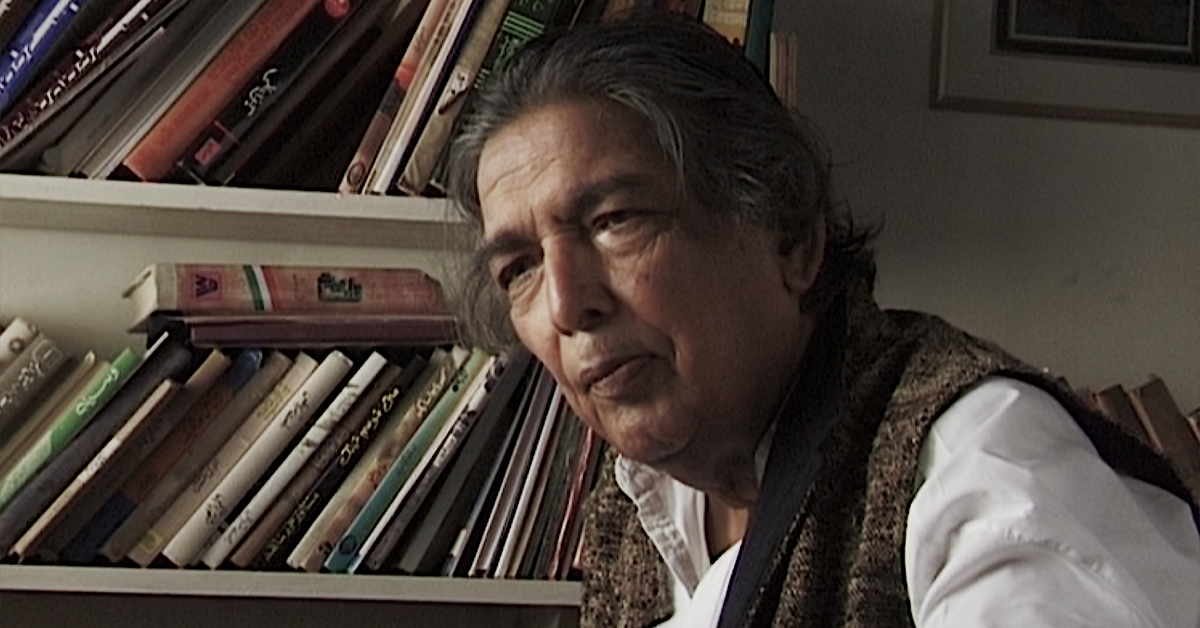
Twenty-four years have passed since the world lost Kaifi Azmi — and yet, it doesn’t feel that way.
On his death anniversary this year, daughter and celebrated actor Shabana Azmi put it best: “24 saal guzar gaye after he left us, but aisa nahi lagta hai ki woh hamare beech nahi hain. Aisa lagta hai ki, Abba hamare saath hain, hamaara haath pakde huein hain, humein raasta dikha rahein hain.”
That is the power of Kaifi Azmi — not just a poet, but a presence that endures.
A Legacy That Grows With Time
Born Athar Husain Rizvi on January 14, 1919, in Mijwan, Azamgarh (Uttar Pradesh), Kaifi Azmi wrote his first ghazal —“Itna to zindagi mein kisi ki khalal pade”— at the age of just eleven. What began as a young boy’s musings in the lanes of eastern Uttar Pradesh grew into one of the most powerful poetic voices of the 20th century, one that shaped Urdu literature, Hindi cinema, and progressive thought in equal measure.
On May 10, 2026 — the 24th anniversary of his passing — the Postal Department’s Maharashtra Circle released a special postal cover in Mumbai to honour the legendary poet’s contribution to literature, cinema, and progressive thought.“Kaifi Azmi is being remembered all over the country 24 years after he passed away. This is testimony to the fact that his work remains relevant over the ages,”Shabana Azmi said at the event.

The Poet Who Practiced What He Preached
Kaifi Azmi was not content to let his words live only on paper. A committed member of the Communist Party of India and a stalwart of the Indian People’s Theatre Association (IPTA), he worked actively with leather workers in Agra and Kanpur as a trade union leader, fighting for the rights of ordinary workers. His poetry was never abstract — it grew directly from the soil of lived struggle.
Shama Zaidi, the legendary screenplay writer and close collaborator, who knew Kaifi Saab through their shared years at IPTA, recalls him as a man of quiet depth and dry wit.“He would say something with a straight face, only later did you realise that he was pulling your leg,”she remembers fondly.
His personal commitment to the betterment of his hometown, Mijwan in Azamgarh, was equally remarkable. He founded the NGO Mijwan Welfare Society, which focused on rural economic development and the revival of chikankari embroidery, creating meaningful employment for women from small towns and villages — a mission that daughter Shabana Azmi continues to carry forward to this day.
The Man Behind Garm Hava
Few know the full story of how Kaifi Azmi helped shape one of Indian cinema’s most enduring masterpieces. When filmmaker M.S. Sathyu and writer Shama Zaidi were crafting the screenplay of Garm Hava(1974), the script needed deeper political understanding. It was Zaidi who brought it to Kaifi Saab.
“I took it to Kaifi Saab and asked him to fix the politics,”recalls Zaidi. Working from the same characters and situations, Kaifi Azmi rewrote the entire film in a matter of months. Among his crucial contributions was redefining the film’s ending: instead of the Muslim family ultimately leaving for Pakistan — as in the original story — he insisted they stay back and fight for their rights in India, a powerful statement about belonging and resistance.
Garm Havawent on to become India’s official entry for the Academy Awards in the Best Foreign Language Film category, and won the National Award for Best Feature Film on National Integration. Kaifi Azmi took home the Filmfare Award for Best Dialogue — a fitting recognition for a man whose every word carried the weight of conviction.
Cinema’s Most Soulful Lyricist
In Bollywood, Kaifi Azmi stood alongside legends like Sahir Ludhianvi, Jan Nisar Akhtar, and Majrooh Sultanpuri in transforming the language and spirit of Hindi film songs. His songs were never mere entertainment — they were poetry in disguise, extension of his deep literary sensibility.
Among his most celebrated contributions to Hindi cinema:
- Waqt Ne Kiya Kya Haseen Sitam—Kaagaz Ke Phool(1959)
- Yeh Duniya Yeh Mehfil—Heer Raanjha(1970)
- Chalte Chalte Yun Hi Koi—Pakeezah(1972)
- Tum Itna Jo Muskura Rahe Ho—Arth(1982)
- Jhuki Jhuki Si Nazar—Arth(1982)
- Ab Tumhare Hawale Vatan Sathiyon—Haqeeqat(1964)
- Kuchh Dil Ne Kaha—Anupama(1966)
His screenplay and dialogue forHeer Raanjha(1970), written entirely in verse — a first in Indian cinema — remains a landmark experiment that no filmmaker has dared to replicate.
Awards & Recognition
Kaifi Azmi is the most awarded Urdu poet of his era, honoured by both the state and literary institutions:
- Padma Shri— Government of India
- Sahitya Akademi Award & Fellowship
- Maharashtra Gaurav Award
- Yash Bhartiya Award— Government of Uttar Pradesh
- Soviet Land Nehru Award
- Afro-Asian Writers Lotus Award
- Filmfare Award for Best Dialogue—Garm Hava
The Unfinished Work
Even in his final days, Kaifi Saab kept writing. His last creative project was a play based on his long Urdu poemZehr-e-Ishq. A reading had been held before he fell seriously ill.“It can never be performed now because half the manuscript is lost,”Shama Zaidi says with a sigh that carries decades of grief.
Yet, what he left behind is vast enough to sustain us for generations. His words on women’s rights, on the rights of laborers, on the environment, on love and longing — all continue to burn with urgency and beauty.
A Rebel With a Cause, Forever
Kaifi Azmi passed away on May 10, 2002, in Mumbai, leaving behind a body of work that refuses to age. His real name was Athar Husain Rizvi, but the world knows him simply as Kaifi — the one who intoxicates. And intoxicate he did — with poetry that could make you weep, rage, hope, and love, often all at once.
As long as there are injustices to fight, hearts to mend, and evenings of sorrow that need reminding they are only evenings — Kaifi Azmi will remain, hand extended, showing us the way.
“Kaifi Azmi’s work remains relevant over the ages.”
— Shabana Azmi
This article has been published on the Official Website of Kaifi Azmi — Rebel With a Cause.
Kaifi Azmi: The Poet Who Still Speaks to Our Times


